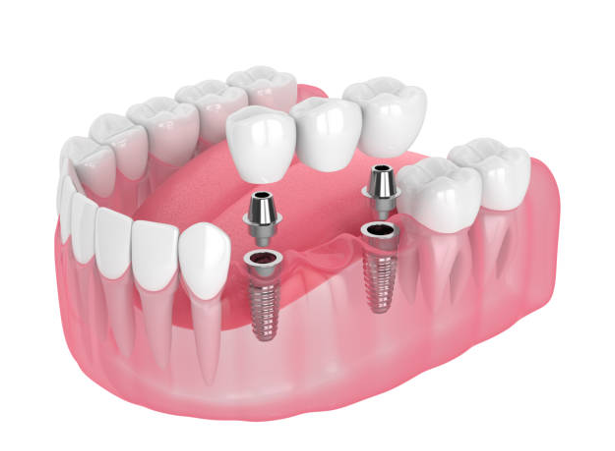

Missing one or more teeth can affect chewing, speech, and the alignment of nearby teeth. A dental bridge can fill the gap and restore the function of your bite. When supported by dental implants, a bridge can replace several missing teeth without relying on natural teeth for support.
Understanding dental implant bridges can help you compare tooth replacement options and decide which questions to ask your dentist. The right treatment depends on the number of missing teeth, jawbone health, gum condition, and your overall oral health. A dental examination is needed to determine whether an implant-supported bridge is suitable for you.
What Is a Dental Implant Bridge?
A dental implant bridge is a fixed restoration that replaces multiple missing teeth. Instead of attaching the bridge to natural teeth, the dentist connects it to dental implants placed in the jawbone. The implants act as artificial tooth roots and provide support for the replacement teeth.
This option may be suitable when several teeth are missing in a row. The number of implants required depends on the length of the gap, the position of the missing teeth, and the amount of available bone.
How an Implant-Supported Bridge Works
Dental implants are placed in selected positions along the jaw. After the implants have healed sufficiently, a custom-made bridge is attached to them.
The bridge contains replacement teeth designed to fit the gap and work with your bite. Its shape, material, and attachment method depend on your treatment plan. Your dentist will check the fit and chewing contact to help reduce unnecessary pressure on the implants.
When Might You Need a Dental Implant Bridge?
An implant-supported bridge may be considered when two or more neighboring teeth are missing. It can also be an option when damaged teeth need to be removed and the resulting gap requires a fixed replacement.
The treatment does not suit every patient. Your dentist will examine the surrounding teeth, gums, jawbone, and bite before recommending a bridge. Other options, including individual implants or removable partial dentures, may be more appropriate in some cases.
See also: Yacht Engine Care: Keeping Your Vessel Reliable and Ready for the Water
Replacing Several Missing Teeth
Replacing several teeth with a bridge can reduce the need to place an individual implant for every missing tooth. The bridge distributes chewing forces across the supporting implants when it is properly planned and fitted.
The number and position of implants are based on clinical needs rather than a fixed rule. Your dentist will consider the size of the gap, bone support, and expected biting forces before deciding on the design.
Protecting Neighboring Natural Teeth
A traditional dental bridge usually relies on neighboring teeth for support. Those teeth may need to be reshaped to hold the restoration.
An implant-supported bridge uses implants instead, which can help preserve healthy neighboring teeth. However, the treatment requires surgery, and the implants must be supported by healthy bone and gum tissue.
Main Benefits of Implant-Supported Bridges
An implant bridge provides a fixed way to replace missing teeth while restoring a continuous biting surface. It may improve chewing comfort and help maintain the spacing between the remaining teeth.
The long-term result depends on proper placement, healing, daily cleaning, and regular dental visits. Patients should understand that an implant bridge may need maintenance or repair as it ages.
Improved Chewing and Stability
A well-fitted implant bridge can provide a stable surface for chewing. Because the restoration is secured to implants, it does not need to be removed daily like a removable partial denture.
Some adjustment may be needed after the bridge is fitted. Your dentist will check the bite and make changes if certain teeth receive too much pressure.
Support for Jawbone Health
The jawbone can gradually lose volume after tooth loss because the missing roots no longer provide normal stimulation. Dental implants transfer chewing forces to the surrounding bone and may help limit bone loss in the treated areas.
This benefit depends on healthy tissue around the implants. Poor oral hygiene and gum inflammation can damage the supporting structures, so daily cleaning and professional monitoring remain necessary.
The Dental Implant Bridge Procedure
Treatment usually involves an examination, implant placement, a healing period, and fitting the final bridge. The exact schedule depends on bone health, the number of missing teeth, and whether additional procedures are needed.
Your dentist should explain the expected timeline and any temporary replacement options before surgery. Ask about the risks, treatment alternatives, and maintenance requirements so you can make an informed decision.
Examination and Treatment Planning
The first appointment includes a review of your medical history and an examination of your mouth. Dental X-rays or three-dimensional imaging may be used to assess bone volume and plan implant positions.
If gum disease or other dental problems are present, they may need to be treated first. Bone grafting may also be recommended when there is not enough bone to support the implants safely.
Implant Placement and Healing
During surgery, the dentist places the implants into the jawbone using local anesthesia. Sedation may be available when appropriate.
The implants need time to bond with the bone through a process called osseointegration. This may take several months. A temporary restoration may be provided when suitable, but immediate placement is not possible for every patient.
Fitting the Final Bridge
Once the implants are stable enough to support the restoration, the dentist attaches the final bridge. The dentist checks the fit, appearance, and bite to ensure the replacement teeth function properly.
Follow-up appointments help monitor healing and identify problems early. Your dental team will also explain how to clean around and beneath the bridge.
Finding Teeth Bridge Treatment Near You
Searching for teeth bridge treatment near me can help you find dental providers who offer tooth replacement services. Choosing a provider involves more than comparing prices because implant treatment requires careful planning and follow-up care.
Look for a dental professional who explains the procedure, discusses possible complications, and provides a clear treatment estimate. Ask who will place the implants, who will fit the bridge, and how future maintenance will be handled.
Questions to Ask Before Treatment
A consultation should give you enough information to compare your options. Consider asking these questions:
- How many implants will support my bridge?
- Will I need a tooth extraction or bone graft?
- What type of bridge material is recommended?
- How long will treatment and healing take?
- What happens if an implant or part of the bridge needs repair?
Clear answers can help you understand the proposed treatment and the care required afterward.
What Does a Dental Implant Bridge Cost?
The cost varies according to the number of implants, bridge materials, diagnostic imaging, extractions, bone grafting, and other treatment needs. A longer bridge or a more complex case may involve additional procedures and expenses.
Request an itemized estimate that explains what is included. Confirm whether the fee covers implant placement, abutments, the final bridge, temporary teeth, and follow-up visits. Ask about financing and insurance coverage before agreeing to treatment.
Discuss your tooth replacement options with a dental professional.
Schedule a free consultation with TruSmile to discuss your dental condition, available treatments, and the expected steps involved in implant-supported tooth replacement.
Caring for Your Dental Implant Bridge
Daily cleaning helps protect the gums and bone around the implants. Brush twice a day and use interdental brushes, floss threaders, or other cleaning tools recommended by your dentist to remove plaque from areas beneath the bridge.
Attend regular dental checkups so your dentist can examine the implants, gums, and restoration. Contact the dental office if you notice persistent pain, swelling, bleeding, or movement in the bridge. Early assessment can help identify problems before they become more serious.
Frequently Asked Questions
1. How many teeth can a dental implant bridge replace?
An implant-supported bridge can replace several missing teeth in a row. The number of teeth and implants depends on the length of the gap, bone health, and the forces placed on the restoration.
2. Is a dental implant bridge permanent?
An implant bridge is designed as a fixed restoration, but that does not mean it lasts forever without maintenance. Implants can last many years, while the bridge may require repair or replacement over time.
3. Is getting an implant-supported bridge painful?
Local anesthesia is commonly used during implant placement to control pain. Some soreness and swelling may occur afterward. Your dentist will provide recovery instructions and explain suitable pain management options.
4. How long does dental implant bridge treatment take?
Treatment may take several months because the implants need time to integrate with the jawbone. The timeline depends on healing, bone health, and whether additional procedures are required.
5. Where can I learn more about dental implant bridges from TruSmile?
Visit TruSmile to learn more about dental implant services and consultation options. A dental professional can assess your oral health and explain whether an implant-supported bridge may suit your needs.